
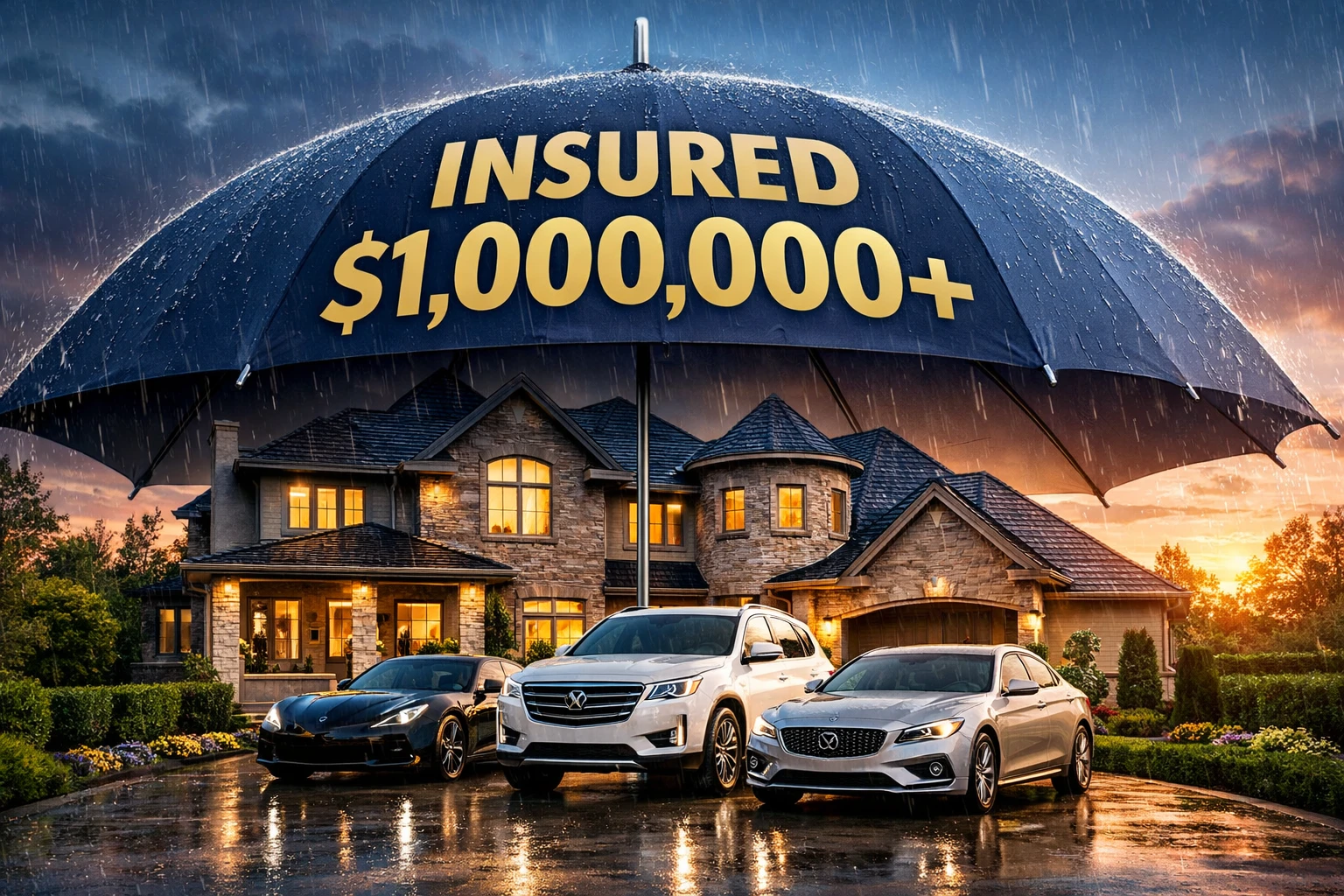
As home values rise, income increases, and investment accounts grow, liability protection should be reviewed along with the rest of a household’s financial picture. Umbrella coverage can become more important as assets, property ownership, future earnings, and overall financial exposure grow.
For many families, the conversation eventually shifts from “What does my policy cost?” to “How much liability exposure could affect the assets I have worked to build?” The answer is different for every household, which is why umbrella coverage should be reviewed based on assets, income, underlying home and auto limits, carrier requirements, and real-world exposure.
Has your net worth changed over the past few years?
If your home value, income, investments, business interests, or property ownership have grown, it may be time to review how your liability protection is structured.
Home and Auto Policies Weren’t Designed to Protect Significant Assets Alone
Homeowners Insurance and Auto Insurance provide important foundational liability protection. But those policies usually have their own liability limits, and those limits may have been selected years ago when the household’s financial picture looked very different.
A home or auto policy can respond to covered liability claims, but it was not designed to be the only layer of protection for every household, especially when assets, income, real estate ownership, or future earning potential have grown. That does not mean everyone needs the same umbrella limit. It means the structure should be reviewed against the exposure.
Where Larger Liability Claims Actually Come From

Significant liability claims do not usually come from small inconveniences. They tend to arise from high-severity events where injuries, legal defense costs, medical expenses, lost wages, or long-term damages become part of the claim.
- Serious auto accidents involving injury
- Guest injuries on your property
- Teen driver liability exposure
- Rental properties or secondary homes
- Travel-related incidents or claims away from home
In many households, the auto policy is one of the most common places a large liability claim can begin. That is why umbrella coverage is usually reviewed together with the underlying home and auto limits, not in isolation.
What an Umbrella Policy Actually Does
A Personal Umbrella Insurance policy provides an additional layer of liability protection above qualifying underlying policies, such as home and auto insurance. It is designed to extend protection beyond the limits of those policies when a covered claim exceeds the underlying liability limit.
An umbrella policy does not replace the home or auto policy beneath it. It sits above those policies and depends on them being structured correctly. Carriers may require certain underlying liability limits, and eligibility can vary based on drivers, properties, claims history, recreational exposures, rental properties, and other underwriting factors.
Asset Growth Changes the Conversation
There is a difference between insuring property and protecting wealth. A household may insure the home, vehicles, and belongings, but liability exposure is different because a serious lawsuit can reach beyond a single piece of property.
When a household owns a higher-value home, maintains investment accounts, operates a business, owns rental property, has young drivers, or has meaningful future earning potential, the financial exposure in a liability claim can become more significant. Umbrella coverage is not about fear. It is about alignment, making sure the liability structure reflects the household’s current reality.
When Should Umbrella Limits Be Reviewed?
Umbrella limits should be reviewed periodically and whenever a major life, property, or financial change occurs. The right discussion is not simply “How much umbrella coverage should I buy?” It is “What exposure do I have, what underlying limits are required, and how should the layers work together?”
- Your home value has increased significantly
- Your income, savings, or net worth has grown
- You have added teenage or young adult drivers
- You have acquired rental property, a secondary home, or land
- You serve on a board, own a business, or have public-facing responsibilities
- You have not reviewed liability limits in several years
Final Thought
Insurance structure is rarely static. As a household grows, accumulates assets, buys property, adds drivers, or takes on new responsibilities, the coverage strategy should be reviewed as well.
If you own a higher-value home in Ohio, have growing assets, or simply have not reviewed your liability limits recently, it may be worth taking a closer look at how your protection is layered. The goal is not to assume one umbrella limit is right for everyone. The goal is to understand the exposure and structure the coverage accordingly.
Request a Coverage Review
If you would like a second set of eyes on your current home, auto, and umbrella structure, we can help review the layers and identify questions worth discussing with the carrier.
Submitting a request does not bind, change, or cancel coverage. Policy terms, eligibility, underwriting requirements, required underlying limits, exclusions, and carrier approval apply.